Old monitor, the pitch or the connection
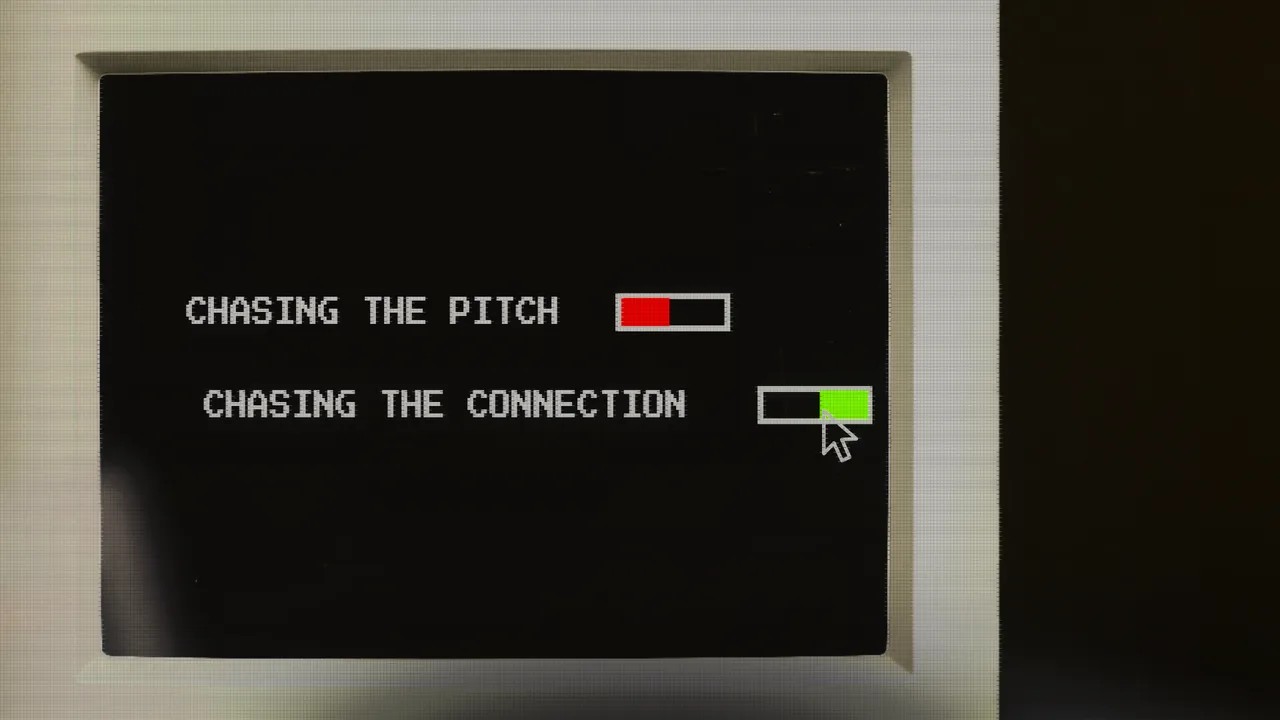
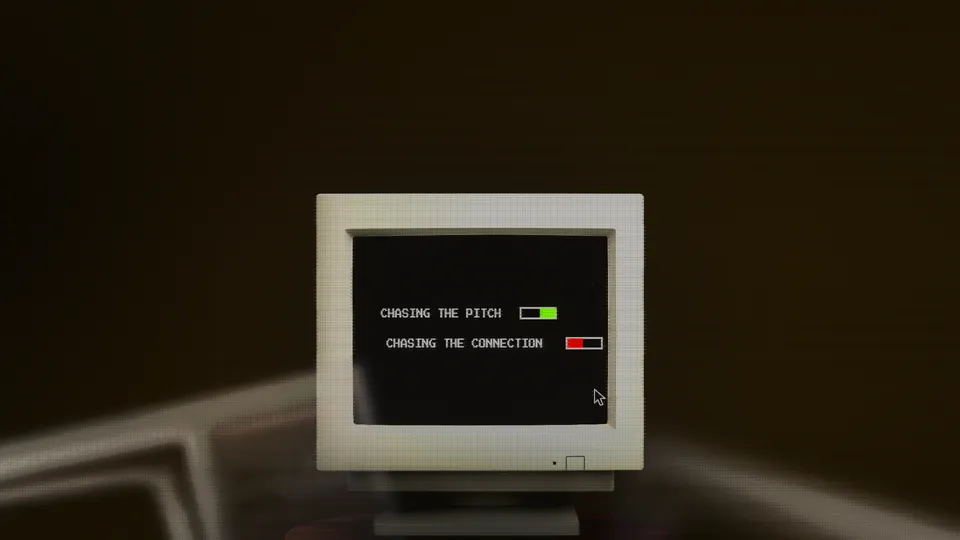
The camera glides into an old beige computer monitor whose screen shows two choices with toggles; a pointer switches one off and the other on, then the camera pulls back fast.
Comparisons3 s16:9, 9:16Build with Remotion, HyperFrames or HTML
Your prompt
Free: leave your email once, then copy it whenever you want.
Paste it into Claude (Claude Code works best). It builds the scene and shows you 3 still frames before rendering. How to use it
About this animation
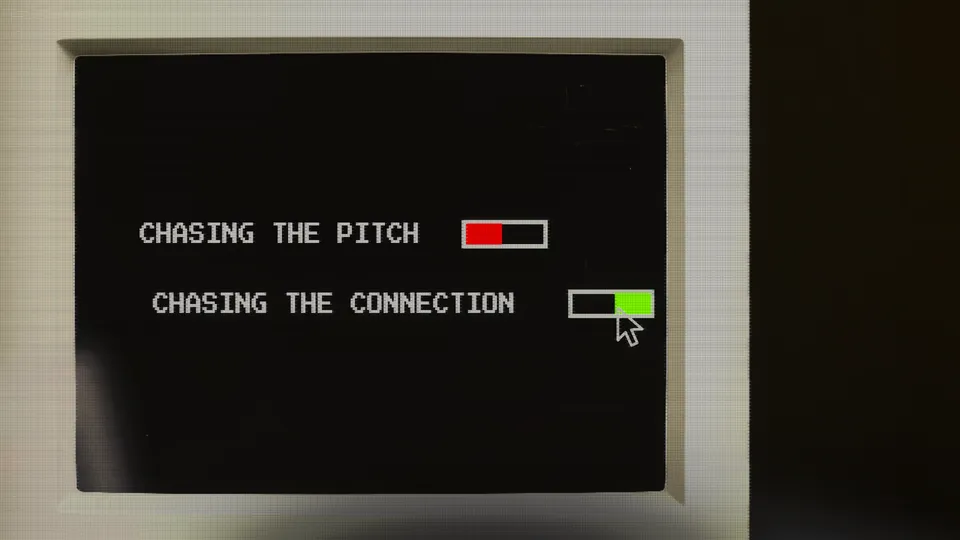
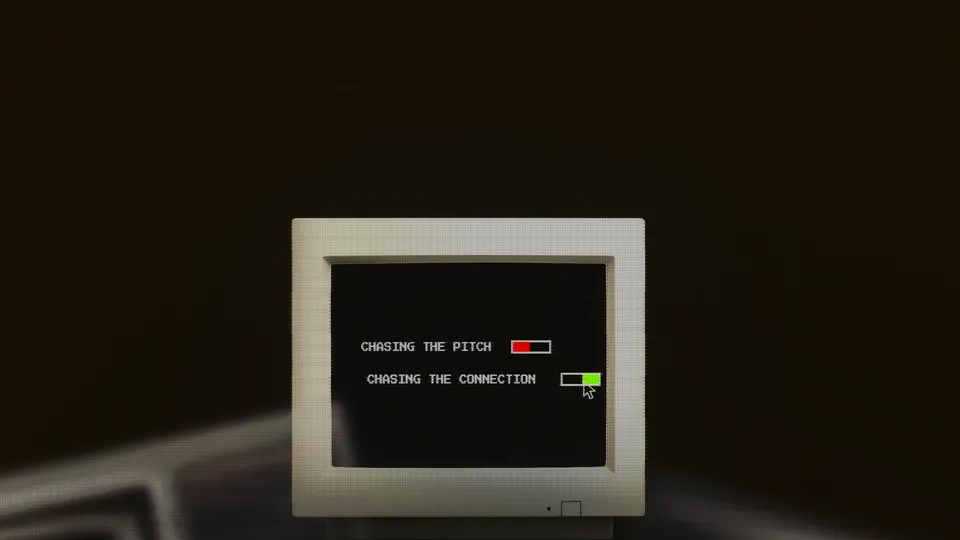
A retro comparison scene: an old beige computer monitor stands in the dark on a wooden table, its screen showing two lines in a pixel font, each with a toggle. The camera glides toward it, a pointer switches the first toggle off (it turns red) and the second one on (it turns green), then the camera pushes into the screen and pulls back fast.
It comes from a viral storytelling edit made in After Effects and replayed by code value by value: the camera move, the pointer and the toggles keep the original timing, in the vertical original and a recomposed 16:9 version. The red and green of the toggles keep their meaning, so this scene has no Color setting.
Scene timeline
Second by second, with the example content. Timing adapts to your text.
- 0.0 s
Monitor
An old beige monitor sits in the dark with two pixel-font lines on its screen.
- 0.6 s
Switch
A pointer turns the first toggle off: it goes red.
- 1.5 s
Second switch
The pointer turns the second toggle on: it goes green.
- 2.2 s
Push and pull
The camera pushes into the screen, then pulls back fast.
Frames from the scene
Entrance, middle and final hold, with the example content.
What you can customize
- Texts
- The two choices on the screen.
- Format
- 9:16 is the original; 16:9 is the recomposed horizontal version with the same timing.
Best for
Comparisons
Show the wrong choice and the right one in three seconds.
Sales and mindset videos
Switch from one approach to another, literally.
Retro tech themes
An old computer screen for nostalgic or simple ideas.
How to use it
Customize
Change the text, the color, the format and the tool in the panel above. The live preview follows as you type.
Unlock
Leave your email once to reveal the full prompt and copy it. It is free.
Paste into Claude Code
Start Claude Code in a project folder (npx create-video for Remotion, npx hyperframes init for HyperFrames, any empty folder for plain HTML) and paste the prompt. Claude writes the scene with your content.
Check the 3 frames
Before any render, Claude shows you three still frames: the end of the entrance, the middle of the hold and the moment just before the exit. Ask for fixes until they match the preview.
Render
Approve and let Claude render the video: an MP4 to upload, or a transparent WebM or ProRes 4444 file for your editor. A plain HTML scene is captured frame by frame with a headless browser and FFmpeg.
Pro tips
- Keep both choices about the same length so the toggles stay aligned.
- Start both choices with the same words to make the contrast obvious.
- Follow it with Handshake, the deal that changes everything to keep the same film.
Questions
Is it the original After Effects animation?
Yes. The edit was ported to code value by value: the camera moves, the text reveals, the spotlights, the glows and the transitions play as in the original. Only the words and the replaced pictures are different.
Which formats are available?
Two: 9:16 (1080 × 1920), the original for Shorts, Reels and TikTok, and 16:9 (1920 × 1080), recomposed for YouTube with its own placements, centered on each shot. Same timing, same texts.
Why does the motion step a little?
On purpose: the original edit is posterized (a Posterize Time adjustment layer) to about 22 poses per second for a slightly handmade feel, in both formats, and the port keeps it.
Does it come with sound?
Yes: sound effects from licensed template libraries, placed on the sound cues of the original edit (clicks on the title and the monitor switches, a boom on the handshake, a low drop on the spotlight, keyboard bursts on the typed words, low hits on the red cards, soft pops on the glowing dot, a marker stroke, a riser before the number, a low whoosh and a reveal on the website). Turn Sound on to hear them; the MP4 includes them. The original voice is not included: add your voice-over and music on top.
More animations
Browse the library